CS 231A Frequently Asked Questions
Q1: Scheduling conflict. I have another class during the regular lecture time, can you please move CS231A to another time?
A: Unfortunately we need to accommodate all students in the class; hence, the class cannot be moved. The good news is that CS231A is on SCPD. So in the worst case, you could watch the lectures online without physically attending them. We encourage you to stay in our course!
Q2: What's the collaboration policy in Problem Sets?
A: We expect students to complete their own problem set and to hand in one PS per student. If you did study together, please put the name(s) of your study group on your solution when you hand in the PS. Also, please put number of late days used in the problem set. Finally, we expect students to not look at implementations online. Just like all other classes at Stanford, we take the students Honor Code extremely seriously. Please refer to the link for more details.
Q3: I am already doing some research at a lab that is related to computer vision. Can I use that as my course project?
A: In general, we are open to students to incorporate their existing research project into the Final Course Project. But we expect that your course project is about the specific parts of your research that are 1) pertaining to computer vision, and 2) conducted by you (and your partner currently taking CS231A, if applied). To ensure that, for those students whose course project is part of a larger project from another class or research lab, we ask you to write an Appendix section at the end of the final writeup. This section should clearly spell out the following items:
- Explicitly explain what the computer vision components are in this course project;
- Explicitly list out all of your own contributions in this project in terms of:
• ideas
• formulations of algorithms
• software and coding
• designs of experiments
• analysis of experiments
- Verify and confirm that you (and your partner currently taking CS231A) are the sole author(s) of the writeup. Please provide papers, theses, or other documents related to this project so that we can compare with your own writeup.
Q4: I'm taking CS229/some other course and want to do the same project for both courses. Is this possible?
A: In principle, yes, though you must discuss this with us. In your project proposal and writeups, you must explicitly list out:
• Who is working on the project
• What class the project is being shared with (for all members of the team)
• The exact contribution of each person
• The exact portion of the project that is being counted for CS231A
Failure to do the above is an honor code violation. In addition, there is still a limit of 1-2 students per team (which includes students in the other class). For example, if your CS229 group has 3 students in it, you cannot use that project for CS231a.
Q5: What programming background do I need to take CS231A?
A: Programming will be required for two parts of the class: Problem sets, and final course project. For all Problem Sets, we expect you to know Matlab reasonably well and use it as the main language for completing the programming assignments. For your final course project, you can use the language of your choice.
Q6: Is there any *required* prerequisites for CS231A?
A: Because of the diverse background of our students, it is difficult to require specific classes as prerequisites. But students are expected to have the following background. And our experiences in the past have shown that the following set of knowledge and skills are crucial for excelling in CS231A:
- Knowledge of basic computer science principles and skills, at a level sufficient to write a reasonably non-trivial computer program. Specifically, proficient Matlab skills are required for Problem Sets.
- Familiarity with basic probability theory (e.g. CS109 or Stat116).
- Familiarity with basic linear algebra (e.g. any one of Math 51, Math 103, Math 113, or CS 205).
- Basic knowledge of machine learning (e.g. knowing materials in CS 221 or CS 229).
Q7: I am not taking CS231A for credit, can I audit or sit-in?
A: In general we are very open to sitting-in guests if you are a member of the Stanford community (registered student, staff, and/or faculty). Out of courtesy, we would appreciate that you first email cs231a-aut1213-staff@lists.stanford.edu or talk to the instructor after the first class you attend.
Q8: How do I submit my homework assignment outside class?
A: If you are a regular (non-SCPD) student and need to submit your homework assignment outside class, there is a submission cabinet in the Gates building, near the east entrance. You can find a photo of it here. Please do not email your homework to us. Please remember to write down the date and time of submission as well as the late day you are using for that problem set.
If you are an SCPD student, you should email your solutions to us cs231a-aut1213-staff@lists.stanford.edu and cc to scpd-distribution@lists.stanford.edu as a log. Write "Problem Set PID Submission" on the Subject of the email, where PID is the problem set number (1/2/3/4).
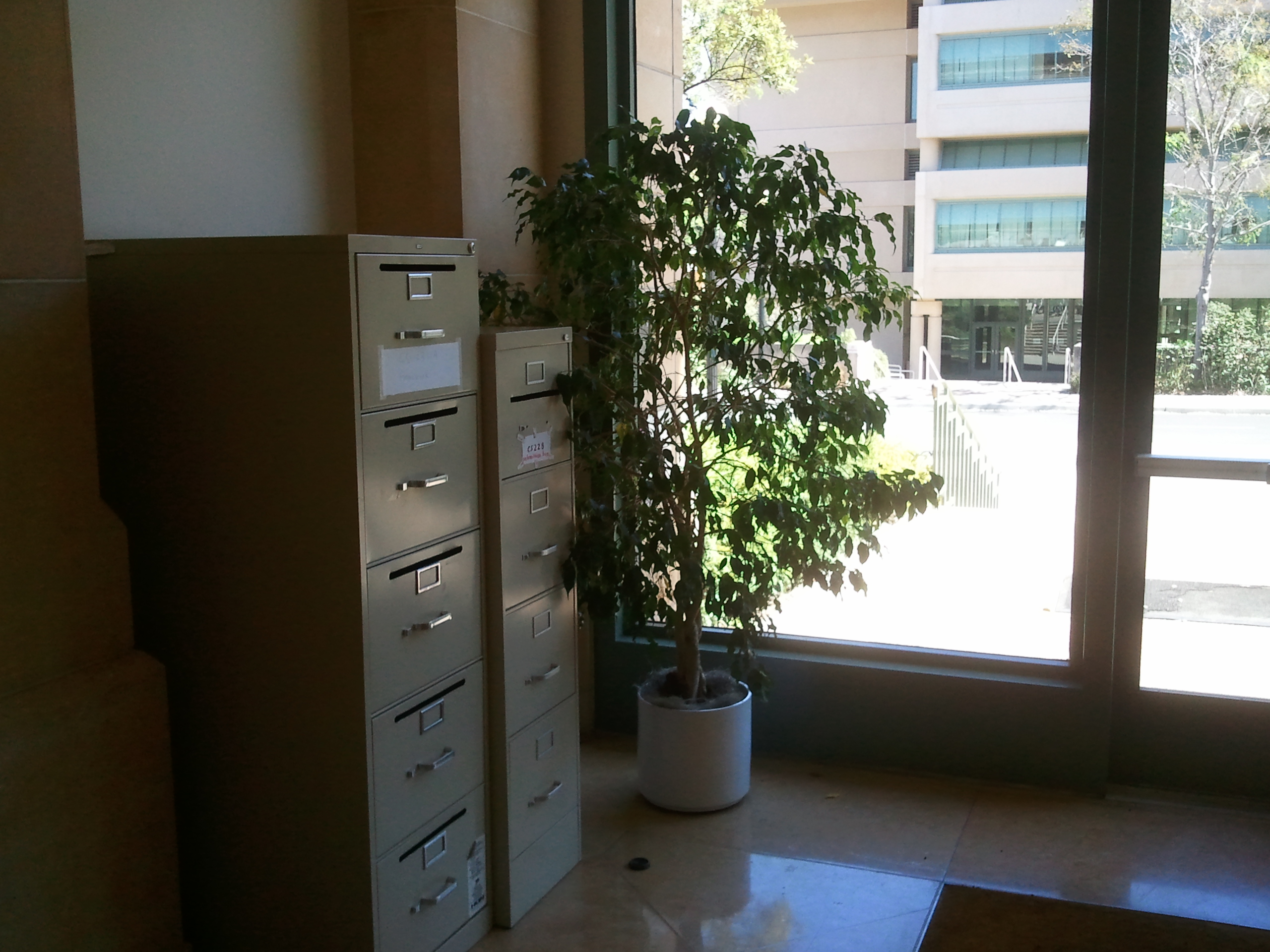
Q9: Are there any special homework submission instructions for SCPD students?
A: All homeworks should be emailed as a SINGLE pdf file. Additionally, all SCPD students should also include the Homework Routing Form available here. This should appear as the very first page of your Homework solutions. Without the form the staff will be unable to return the graded homework to you.
Q10: Will the TA sections be recorded?
A: Yes. The TA sections will also be recorded and can be accessed online along with the recorded lectures.
Q11: I would like to come to homework session on off-business hours but I do not have an access to the buildling. What should I do?
A: Your Stanford ID card can be used as a key to get into the basement of Gates. The room where the homework session is held, Gates 104, can be accessed from the basement; come from the corner entrance to the basement and knock on the door! Then, one of the TAs should open the door for you.
Q12: How could the course be taken for 4 units? What is the difference in the requirements?
A: There is no difference in terms of workload.
Q13: Can I take this course on a credit/no credit basis?
A: Yes. Credit will be given to those who would have otherwise earned a C- or above.